
SuppleMentally Blog
A multimedia supplement to the Mensa Bulletin’s SuppleMentally science column
By John Blinke
- March 13, 2026
- THE BOOK OF BONES
-
When an animal dies, it leaves behind more than just a skeleton. As bones formed during life, blood carried metabolic byproducts from the creature’s diet and environment into the tissue.
Researchers say modern analytical techniques can now detect some of those molecular traces in fossil bones, revealing what animals ate and the environments they lived in — in some cases going back about 3 million years.
This short video explains how scientists are reading those molecular clues in fossilized bone.
SHARE THIS LINK Share
Share
- March 9, 2026
- 18650 BATTERIES
-
You probably own a few 18650 lithium batteries, whether you realize it or not. They power everything from laptops to flashlights and other portable gear.
In this video, Adam Savage looks at some surprising flaws in these common cells and explains why it’s safer to stick with well-known brands.
SHARE THIS LINK Share
- March 6, 2026
- EV BATTERY LIFE
-
A common concern among people considering an electric vehicle is how long the battery will last. In this video, EV analyst The Electric Viking looks at data from real-world EV fleets and explains why the batteries will likely outlast the cars they’re installed in.
That matches my own experience.
Watch here.
SHARE THIS LINK Share
- March 3, 2026
- MARS, IN LINES
-
Mars Guy flags something odd in recent rover imagery: a set of crisp, parallel striations that don’t immediately read as routine geology.
Natural process? Optical trick? Something we haven’t modeled well yet?
Take a look here and decide.
SHARE THIS LINK Share
- February 20, 2026
- TOXIC LEAD
-
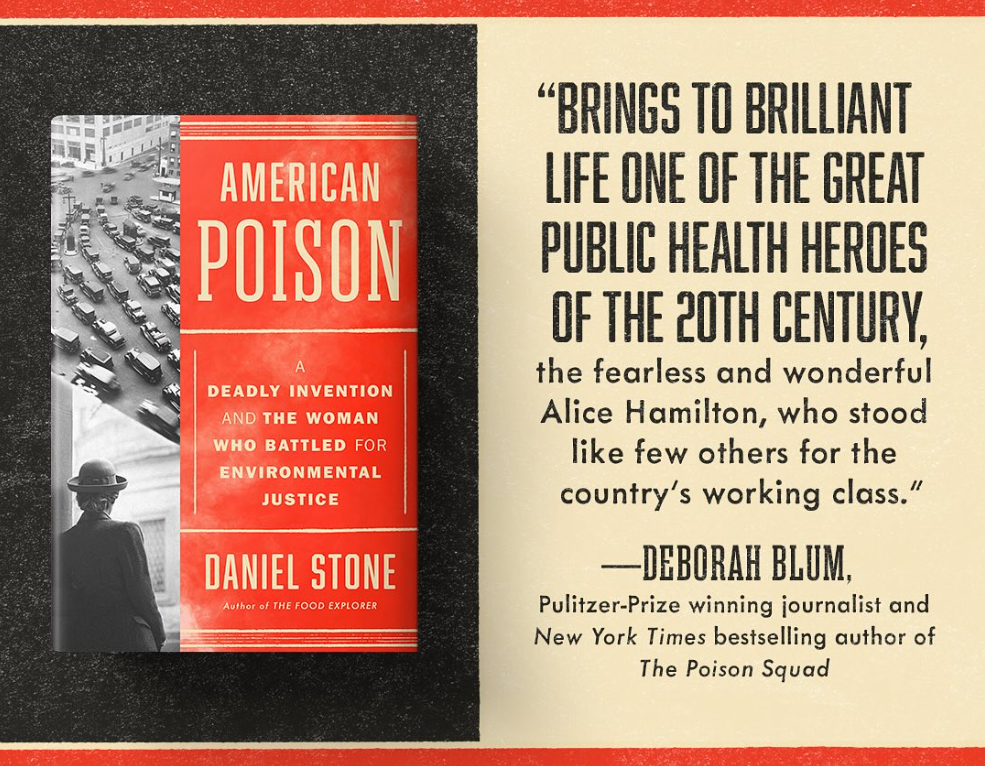
I’m reading American Poison: A Deadly Invention and the Woman Who Battled for Environmental Justice by Daniel Stone. It tells the story of the fight against lead poisoning, led in the early 20th century by Alice Hamilton, a University of Michigan graduate and a pioneer in occupational medicine.
In the 1920s, tetraethyl lead — marketed as “ethyl” gasoline (Boomers said, “Fill ’er up with ethyl!”) — was hailed as a miracle additive that allowed internal combustion engines to run more smoothly. The short-term effects on the public seemed minimal. Over time, though, lead exposure crippled and killed people, and at production facilities it drove some workers mad before they died. Industry resisted regulation, but researchers and activists eventually pushed leaded gasoline out of widespread use.
Hamilton wrote two books on toxicology, as well as her autobiography, Exploring the Dangerous Trades, published in 1943.
Find American Poison here.
SHARE THIS LINK Share
- February 17, 2026
- OH, POOP
-
This Podcast Will Kill You has released a multi-part show about something we are all intimately familiar with: poop. (Notice the scarab beetle T-shirts Erin and Erin are wearing — a little visual humor from the hosts.) As always, there’s more to learn than you ever thought.
The episode delves into the biology of digestion, what makes poop vary in color and smell, how it reflects health, and why it’s such a useful — and underappreciated — source of scientific insight.
Watch here.
SHARE THIS LINK Share
- February 6, 2026
- INTEROCEPTION
-
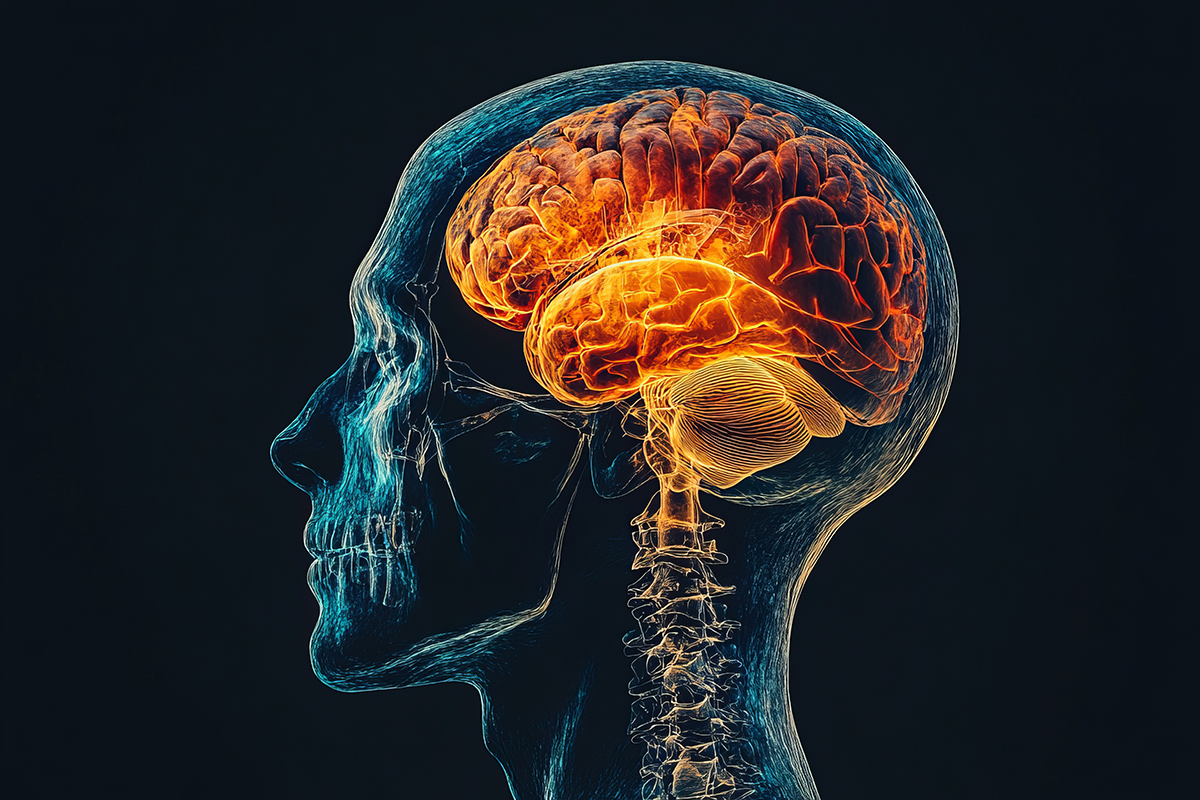
Webster defines interoception as “the sensation arising from stimuli produced within an organism, especially in the gut and other internal organs; perception or awareness of the inner state of the body.” I’m just learning about it myself.
Scientists sometimes describe interoception as a kind of “hidden sixth sense,” and a new $14.2 million research project is investigating where this sense resides in the body and how it works. The effort is funded by the National Institutes of Health and with collaborators at Scripps Research and the Allen Institute. The goal is to better understand how we sense things like hunger, pain, heartbeat, and other internal signals we usually take for granted.
Read more at sciencedaily.com.
SHARE THIS LINK Share
- February 3, 2026
- PYRAMID SCHEMES
-
How did Egypt’s Fourth Dynasty build the pyramids at Giza? There’s no shortage of ideas, and several of them come up in this video from Dami Lee, a licensed architect and design-focused YouTube creator. She lays out what may be the most plausible explanation so far, grounded in archaeology, engineering, and logistics, and also tackles a quieter but important question: Where did all the construction debris go?
SHARE THIS LINK Share
- January 27, 2026
- ABOUT SLEEP
-
“This Podcast Will Kill You” is a scary title for a show that isn’t actually very scary. But it is very well researched. The podcast is hosted by two medical scientists, both named Erin, who do a careful job of explaining health and disease without hype.
This episode (part 2 of their sleep series) takes a deep dive into why we need sleep, what happens when we don’t get enough of it, and what science really knows — and doesn’t know — about how sleep works.
It’s thorough, clear, and surprisingly engaging for something most of us think we already understand.
You can also check out on YouTube.
SHARE THIS LINK Share
- January 23, 2026
- YOUR KITCHEN'S PARTICLE ACCELERATOR
-
Most of us use microwave ovens every day without really knowing what’s happening inside. This video from Branch Education breaks down how a microwave oven works, from how microwaves are generated, to why they heat food the way they do, and why the oven is safe even though it’s full of radiation.
It’s a clear, satisfying explanation of a machine most of us take completely for granted.
SHARE THIS LINK Share
- January 20, 2026
- SOLAR STORM WATCH
-
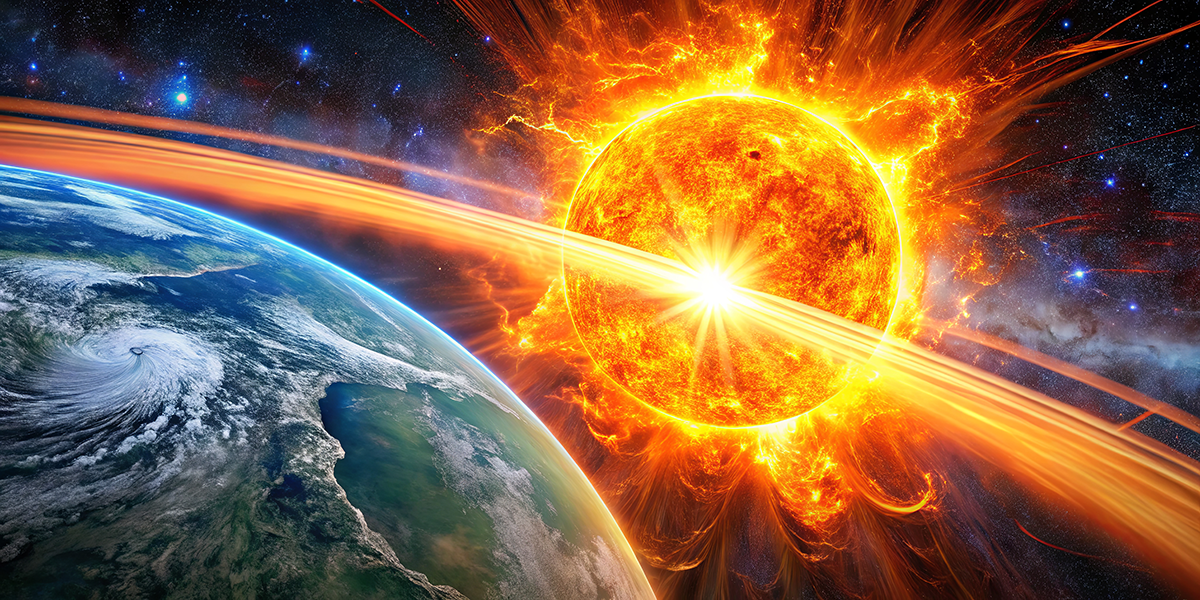
SpaceWeather.com’s current report says a sunspot on the far side of the sun is launching vast blobs of plasma — coronal mass ejections, or CMEs — into space. The good news is that they’re firing away from Earth. The bad news is that the sun rotates, and that active sunspot will soon be pointed our way.
So if your electronic goodies go a little crazy for a while, this could be the reason.
You can follow this and other real-time solar activity on SpaceWeather.com’s daily updates: https://spaceweather.com.
SHARE THIS LINK Share
- January 6, 2026
- DON'T READ BEFORE DINNER
-
I’ve been thinking about the Great Victorian Manure Crisis, first introduced to me years ago on the Stuff You Missed in History Class podcast. That sent me on a binge of related shows — and here they are.
In the 19th century, cities depended on horses for transportation and freight. That meant huge amounts of manure, urine, and flies, along with dead animals in the streets and real public-health concerns. Some modern retellings exaggerate parts of the story — especially the famous “1894 conference” — but the basic problem was very real: horses created massive sanitation issues in crowded industrial cities.
The arrival of electric streetcars and then gasoline automobiles dramatically reduced the urban horse population, which also meant a big reduction in manure. So in that sense, motor vehicles helped solve one public-health problem while creating new ones of their own.
SHARE THIS LINK Share
- December 23, 2025
- SOME 12,000 YEARS AGO ...
-
Göbeklitepe is a 12,000-year-old ceremonial site carved into a stone hillside in southeastern Turkey. When it was first discovered, it surprised archaeologists because it predates cities, farming communities, and most of what we think of as organized civilization. Now, even more intriguing details are being uncovered — including pillars with human-like faces carved into them. And there’s likely much more to learn, because only about 5 percent of the site has been excavated so far.
This video from the Amazing Earth YouTube channel looks at Göbeklitepe and the nearby Taş Tepeler sites, and what they might mean for our understanding of early human culture.
SHARE THIS LINK Share
- December 19, 2025
- ÉMILIE DU CHATELET
-
Émilie du Châtelet was an 18th-century French scientist working at a time when women were largely excluded from formal scientific education and institutions. Despite those barriers, she conducted original research in physics and mathematics and worked from her own laboratory.
She is best known for her translation and commentary on Isaac Newton’s Principia, which helped introduce Newtonian physics to a broader European audience, and for her work on kinetic energy, arguing that energy is proportional to velocity squared — an idea that anticipated later formulations in physics.
Her contributions were long minimized or attributed to the men around her, a reflection of the social and institutional structures of her era that limited women’s recognition in science. This episode of The Science Show explores her life, work, and legacy.
SHARE THIS LINK Share
- December 16, 2025
- MOSQUITOS
-
If you’re sad to see mosquito season go away, here’s a reminder from Ze Frank, a writer and longtime internet creator known for his True Facts videos that mix humor with real biology. This one is funny and slightly naughty, as usual, but it’s also genuinely informative. Along the way, he digs into what makes mosquitos such effective survivors — and why they’ve been such successful pests for so long. Great photography, too.
SHARE THIS LINK Share
- December 11, 2025
- IN-WHEEL EV MOTORS
-
This is news I’ve been looking for. A new EV design uses high-torque axial-flux electric motors in each wheel. That means no drivetrain — just a battery and a computer — delivering enormous weight savings. It’s a high-end vehicle for now, but this is the kind of technology that’s certain to trickle down to the consumer level.
Also, the U.S. Postal Service plans to deploy 66,000 electric vehicles by 2028, replacing an aging fleet powered by dinosaur juice that’s become too expensive to maintain.
Check out the video from Miss GoElectric’s YouTube series The Current: Weekly EV News.
SHARE THIS LINK Share
- December 9, 2025
- LOAD-LEVELING BATTERIES
-
What good are massive batteries connected to the power grid? They can chop the top off peak load and save money — lots of it. Old EV batteries can even be used for this, giving a second life to the growing number of lithium packs that aren’t quite strong enough to power a fire-breathing electric Mustang or Camaro.
Here’s a short video from the Undecided podcast.
SHARE THIS LINK Share
- December 2, 2025
- DISAGREEING PEACEFULLY
-
Just in time for holiday gatherings, here’s a Short Wave episode about how to disagree without everything falling apart. It’s a quick look at what actually helps conversations stay calm and respectful, even when people don’t see eye to eye.
SHARE THIS LINK Share
- November 25, 2025
- HOW DO TURTLE USE EARTH'S MAGNETIC FIELD?
-
Sea turtles travel huge distances in the ocean, but somehow still find their way back to the same beaches. Scientists think they do it by sensing the Earth’s magnetic field.
This short video from BBC Earth Science explains how that works and what we’ve learned so far.
SHARE THIS LINK Share
- November 21, 2025
- SAND
-
Zion National Park in Utah has miles of striking petrified rock formations that are hard to figure out. They’re made of sandstone that was once part of a vast desert system. But where could so much sand come from? And how do we know? Here’s geologist Myron Cook — whose YouTube channel focuses on the geology of the American West — to explain:
SHARE THIS LINK Share

John Blinke has been the Mensa Bulletin’s science editor since 1984 and is a two-time recipient of American Mensa’s National Service Award. He lives in the wilderness of Michigan and keeps busy with a wide range of hobbies, including astronomy, RC models, drones, photography, model rockets, and fooling around with microscopes and other scientific gear. John spent 50 years as an electrician with Ford Motor Company. He holds a BA in English from Wayne State University, completed the UAW-Ford electrical apprenticeship, is a certified Level II Thermographer, and has an Extra Class amateur radio license. Email him at BulletinSupplementally@us.mensa.org.